
Adhesives
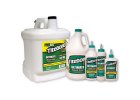
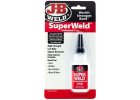
Find the right adhesive for your project. For gluing wood, use Titebond wood glues, which are the number one wood glue. Two-component epoxy adhesives are suitable for bonding plastics and metals. Try J-B Weld adhesives. True to its name, this brand produces joints that match welded joints in strength and durability.
And if you want to make gluing as easy as possible, get handy accessories for your glues - dispensers and application brushes. With them, you only apply glue where it's needed and you won't have glue all around.
Product sorting
List of products

Titebond Instant Medium Jet Black is a black cyanoacrylate adhesive with medium viscosity, primarily designed for filling gaps and knots in wood. Ideal for wood repairs, highlighting details, inlay work, and filling knots or seams. It has high strength, impact resistance, and is resistant to heat and solvents.

This professional wood glue is ideal for filling gaps, bonding porous surfaces and complex shapes.

Titebond Instant Medium is a fast setting adhesive Titebond with a medium viscosity. This professional wood glue has universal use, ideal for filling knots and voids in wood, gluing metal cavities in wood for making turned pens or gluing segments for turning.
The adhesive is cleanable with acetone.

This professional wood glue is ideal for gluing the face grain of wood, for example for corner joints of mouldings and frames, for gluing turning blocks or for quickly fixing the template directly to the workpiece or over paper tape.

Titebond Instant Thin is the fastest setting Titebond low viscosity adhesive. Ideal for repairing hairline cracks and small defects in wood, or for repairing loose veneer edges
Listing controls
Frequently Asked Questions
When choosing a plastic adhesive, it is first necessary to determine what type of plastic is involved. For bonding hard plastics, instant adhesives (cyanoacrylate) or two-component epoxy adhesives are best suited. For bonding polystyrene, use a special polystyrene adhesive without solvents that can etch the surface. On the other hand, solvent adhesives are used for bonding PVC (e.g. sanitary pipes).
Some plastics, such as polyethylene (PE) and polypropylene (PP), are described as non-adhesive because bonding them with adequate strength is almost impossible under domestic conditions.
The most commonly used adhesive for wood is a dispersion adhesive - so-called white glue or PVAC glue. It is suitable for commonly stressed joints in the interior, for the manufacture of toys and musical instruments or for pegging furniture. Waterproof wood glue is suitable for kitchens, bathrooms and exteriors. For moving and stressed joints, use polyurethane adhesive, which remains flexible even after curing. Read detailed instructions on how to choose wood glue.
For Plexiglas and glass, fast-drying adhesives are suitable, which are joined by cold welding. These are usually two-component epoxy adhesives. The bonding of smaller parts made of glass and Plexiglas can also be handled with instant glue (cyanoacrylate). You can find reliable glass glue and plexiglass glue in the offer of manufacturer J-B Weld, which specializes in glues whose strength corresponds to welded joints.
You can use instant glue to glue smaller pieces of fabric. A hot melt gun is suitable for gluing textile decorations. If you want the joint to be resistant to washing and ironing, use a special textile adhesive. Spray adhesives are also handy to create an even layer.
A two-component epoxy adhesive is suitable for bonding glass, which creates strong and durable joints. You can also use instant glue to glue smaller pieces of glass together. If you care about the appearance of the joint, use clear UV glass glue, but you will need a UV lamp to cure it.
For bonding metals, use a two-component epoxy adhesive that bonds by cold welding. If you want to achieve a joint of the same colour, use adhesives with a metal filler - for example, use an adhesive containing aluminium powder as an aluminium adhesive. For smaller, unstressed joints in interiors, the instant adhesive is suitable.
Instead of metal glue, you can also use epoxy putty for repairs, which works like plasticine and can be drilled, cut and sanded once cured.


 Vytvořil Shoptet