
Sanding and grinding wheels for wood
Choose from an assortment of sanding discs and other abrasives for wood and wood materials. You will find the discs categorised by diameter and you can also find sanding belts or tools for hand sanding wood. If you're not sure maybe our article will help you: Sanding Wood for Beginners: How to Get a Perfectly Smooth Surface

Product sorting
1 items total
List of products

Listing controls
1 items total
Frequently Asked Questions
When choosing a wood grinding wheel, it is important to consider several factors that will affect the quality and speed of the grinding process.
- Grit: The grit determines how fine or coarse the surface will be after resharpening. For rough machining and removal of larger irregularities, use low grit discs (e.g. P40–80). For fine grinding and finishing work, discs with higher grit (e.g. P120–240).
- Disc material: Sanding discs made of natural and synthetic materials - garnet, quartz, silicon carbide, ceramic abrasive or emery - are suitable for wood.
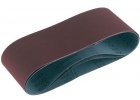
- Type of grinder: each type of grinder requires a different type of wheel - angle grinder, eccentric grinder or belt grinder. Also make sure the disc diameter is correct.
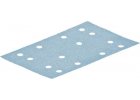
- Holes: some wood grinding wheels are designed with holes for better dust extraction. The disc doesn't get as dirty and lasts longer, plus you'll have a cleaner working environment.
Sanding hardwood requires the right procedure and tools to achieve a smooth surface. We've summarised the key steps for you on the best way to sand wood and how to sand wood correctly.
- Selection of abrasive material: For hardwoods, abrasive papers with a corundum or silicon carbide abrasive layer are best suited.
- Grit of sandpaper: start with coarser grit (P60-80) to remove large irregularities and progress to finer grit (P120-240) to achieve a smooth surface. For hardwoods, it is important not to rush the sanding and to gradually soften the wood.
- Grinding direction: Always follow the direction of the grain to avoid damaging the surface and creating unwanted grooves. For hardwoods, following the grain direction is even more important to achieve an even result.
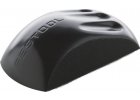
- Use of abrasive tools: For flat surfaces, an eccentric or belt sander is ideal, while for details and rounded edges you can use hand sanders and wood sanding tools.
When choosing wood sandpaper, it is essential to choose the right grit. How to choose the grit of sandpaper to achieve a smooth surface?
- Coarse grit (P40-80): suitable for initial machining when you need to remove larger irregularities or old paint.
- Medium grit (P100-120): ideal for smoothing the surface after rough sanding, evens out minor irregularities. For woods where the surface finish is not so important (e.g. pergola beams, fence panels), this grain is sufficient as a final grain.
- Fine grit (P150-240): for final finishing when you want a perfectly smooth surface (e.g. for furniture or toy production). Perfectly prepares surfaces for painting, varnishing or oiling.
- High grit (P320 and above): used for polishing after applying varnish or oil.
Sandpaper sanding discs are usually not cleaned - simply replace them after clogging. You can get them for as little as a few crowns, so it's not such a problem. However, you can get a special grinding wheel cleaner that will pick up dust from the grinding wheel and extend its life.


 Vytvořil Shoptet