
Saw discs
When choosing a saw blade, decide on the type of saw and the material you plan to cut. In our offer you will find blades for wood, plastic, composite materials and carbide saw blades for metals. Saw blades with SK blades (made of sintered tungsten carbide) ensure constant sharpness and high blade durability.
Wood cutting discs are divided into discs suitable for cross-cut or rip cuts, or you can use universal discs for both types of cuts. Circular saw blades are suitable for firewood preparation and do not get dull even due to minor dirt.
Circular saw blades and mitre saw blades are primarily used for joinery work. But the right saw blade will turn your saw into a tool suitable for cutting plastic or metal. Special blades, such as a grooving saw blade or a pre-cutting blade that prevents burrs on the other side of the cut, are also used in the joinery workshop.
When deciding what to cut cetris boards with, give preference to diamond tooth blades. They are not subject to such rapid wear and tear.

Product sorting
List of products

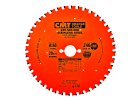
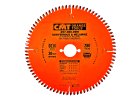
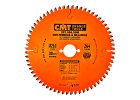
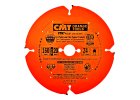
CMT ITK | Diamond saw blade ø 250x1,8/2,4x30 mm Z16 with alternating trapezoidal and straight teeth (TCG/TFZ), for cutting extra hard materials such as DuPont Corian®, cement-bonded and cement-fibreboard, MDF, DTD and plasterboard.

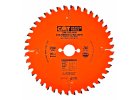
Festool | Saw blade ø 168x1.2/1.8x20 mm Z16 WZ mm Z16 WZ for plunge saws with a cutting width of 1.8 mm, a body thickness of 1.2 mm and a tooth face angle of 20° is ideal for fast longitudinal cuts in solid wood with minimal effort.
Listing controls
Frequently Asked Questions
First, find out what blade and clamping hole diameter your saw requires. This is crucial to ensure that the blade fits correctly in the saw. Next, choose a saw blade according to the material you will be cutting with it. This determines the thickness of the disc, the shape and the number of teeth. Read detailed instructions on how to choose a saw blade.
Saw blades are produced for various types of materials - wood, plastic, metal, composites, etc. To achieve a clean and accurate cut, use the appropriate gearing for the material. Wood cutting wheels have different characteristics than those designed for cutting laminate, metal or plastic. Using a suitable blade will also extend its life - there is no risk of dulling or breaking teeth.
If you are going to cut solid wood, you should consider whether it is a longitudinal cut (parallel to the grain) or a cross cut (across the grain). Crosscut saw blades have more teeth for a smooth and clean cut. On the other hand, a blade with fewer teeth is better for longitudinal cutting to make the cut faster and more efficient. We also offer saw blades for universal cutting.
The quality of the cut is mainly influenced by the thickness of the blade and the number of teeth. If you need a smooth and fine cut, choose a blade with more teeth. At the same time, choose thinner blades that do not remove as much material and are suitable for clean and precise wood cutting. For fast cutting where surface quality is not critical, a disc with fewer teeth is sufficient. For thicker materials such as wooden beams, you will get a good cut with thicker discs that do not ripple and are more stable.
When choosing how many teeth on the blade, also consider the diameter of the blade and the thickness of the material. A universal rule of thumb says that there should be at least three teeth in the frame.
A saw blade can last up to several years, depending of course on how often you cut with it. If you plan on frequent use, especially in a professional environment, it's worth investing in a blade with SK blades (carbide teeth) as they last longer and are more durable.
Also be interested in the thickness of the carbide tooth. The thicker the carbide layer, the more times you can sharpen the blade. To extend the life of the saw blade, clean it after each cut and store it in a dry place.


 Vytvořil Shoptet